In Korea, people pay attention to what’s in season. Right now, that means shrimp. I eat salt-grilled shrimp almost every year, and this is how it works.
Salt-Grilled Shrimp
I had this at a grilled fish restaurant near my house. They also sold shrimp by weight, about ₩50,000 per kilo this year. One kilo was enough for two of us.
The menu called them 왕새우, which literally means “king shrimp.” They come to the table raw, still moving a little, in a pan with a glass lid on top. You cook them yourself on the burner at your table.
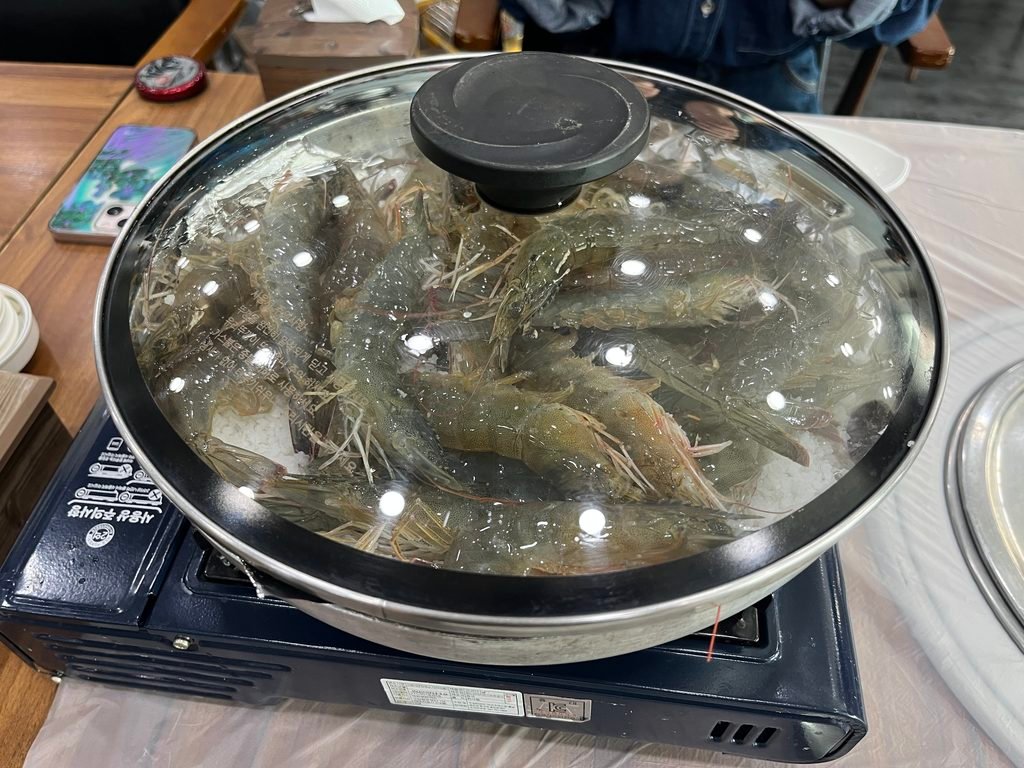
Here’s how to cook them:
- Put the lid on and leave them over the heat.
- When the heads turn orange, turn off the heat.
- Wait 3 to 4 minutes, then peel and eat.
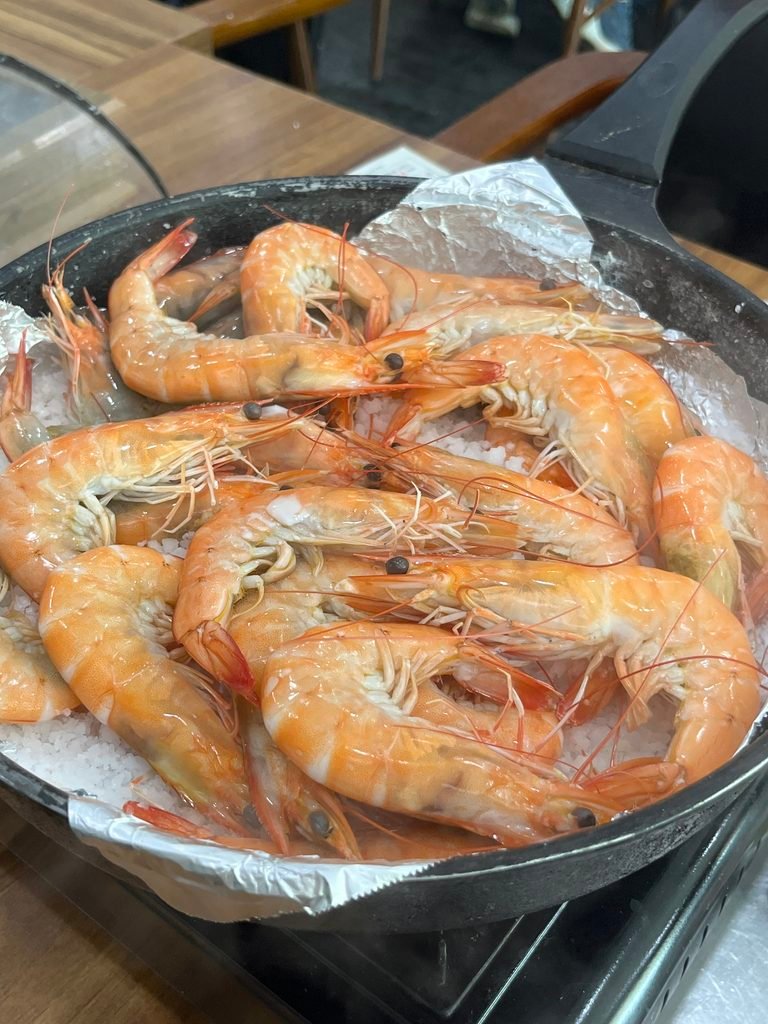
Restaurants here hand you cotton work gloves. Put a disposable glove over them, and you can peel the hot shrimp without burning your hands.
You can dip them in 초장 (chojang), a sweet and spicy red pepper sauce.
It was really good. Eating salt-grilled shrimp just feels like autumn.
Butter-Fried Heads
Once you’ve finished the shrimp, you can ask for the heads to be butter-fried. At the place I went, it was ₩5,000 extra. I don’t know if every restaurant does this or charges the same, so ask first. It’s rich, salty, and full of umami.
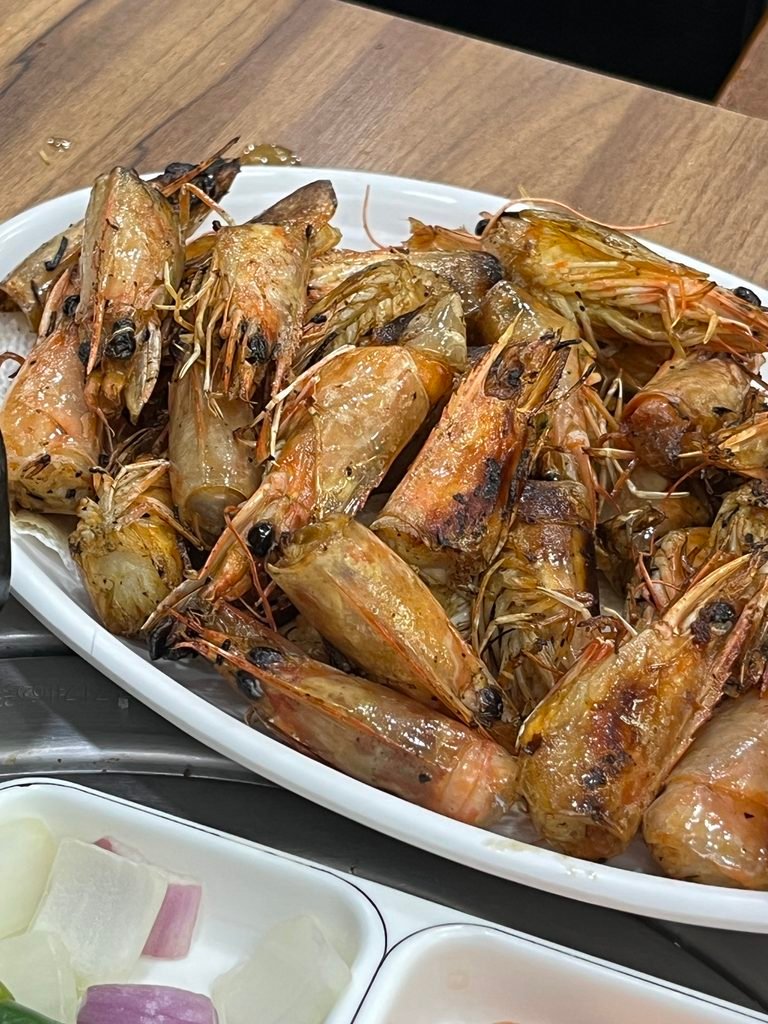
Here’s how I eat the head. I grab the pointed horn on top and pull up, and the shell comes right off. I eat up to the eyes, because eating the eyes is a bit scary.
It’s a bit like eating 간장게장 (soy-marinated crab). You suck out the good part and leave the rest.
Shrimp Ramyeon
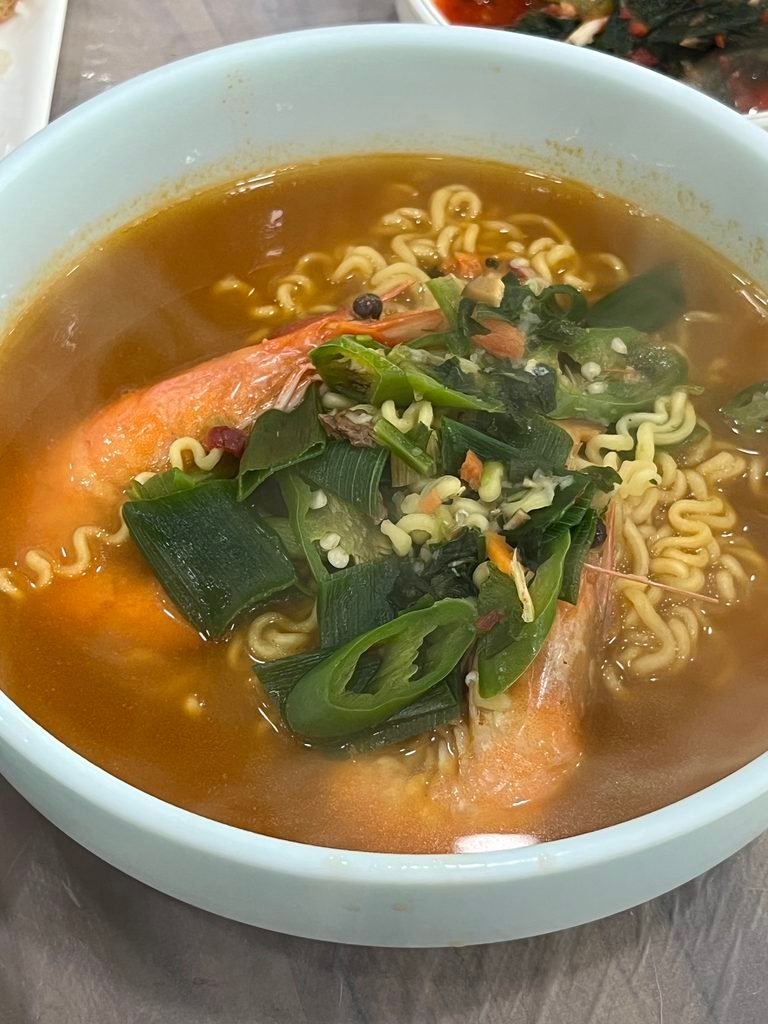
After a lot of shrimp, it gets a little heavy. That’s where the ramyeon comes in. Most places I’ve been to have shrimp ramyeon, with shrimp in it. We Koreans need a hot, spicy broth to cut through the richness. It’s the same feeling as when you travel abroad and suddenly crave a bowl of Shin Ramyun.
Where to Find Them
Seoul has big fish markets too, like Noryangjin and Garak Market. At Noryangjin, you can buy fresh seafood from a stall and take it to a restaurant upstairs, and they’ll grill the shrimp for you. Korea also has a lot of 횟집 (raw fish restaurants), and the one near my house serves salt-grilled shrimp too.
What to Look For on the Menu
Look for 새우구이 or 생새우 소금구이. Mine was called 왕새우.
You may also see 대하 (daeha) on menus, especially in autumn. Daeha is associated with the season, but not every large shrimp sold at a restaurant is necessarily daeha. I didn’t confirm the exact type I ate, so I’m just calling mine shrimp.
Either way, if you’re in Korea in autumn, it’s worth trying. For me, the best part isn’t just the shrimp themselves, but the whole meal: peeling them at the table, ordering the butter-fried heads, and finishing with a bowl of spicy ramyeon. It’s one of those meals that makes autumn feel like autumn.
Leave a Reply